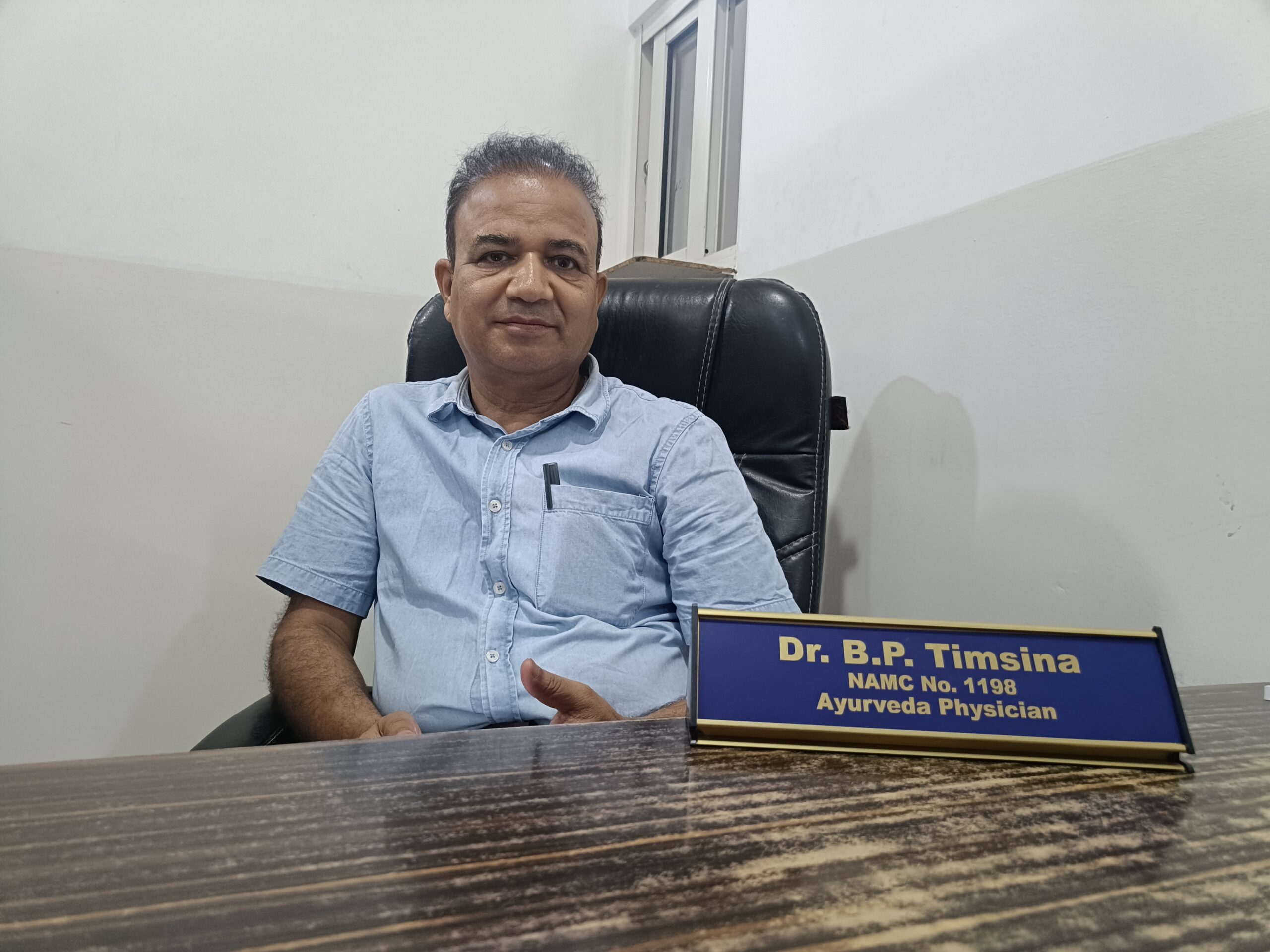
Kathmandu: In the rich landscape of traditional medicine, where ancient knowledge meets modern healthcare, few figures have devoted themselves as deeply to the study of medicinal plants as Dr. Bijuli Prasad Timsina, an Ayurvedacharya and senior Ayurvedic physician from Nepal. Over the course of his career, Dr. Timsina has become known for his lifelong commitment to Ayurveda, herbal medicine, and the exploration of Nepal’s extraordinary botanical heritage. According to his professional profile and accounts associated with his work, he has studied more than 6,000 species of Nepali medicinal plants, spent 14 years living in forests and mountainous regions conducting field research, and contributed to the treatment of hundreds of thousands of patients through Ayurvedic care.
His journey reflects not only the life of a physician but also that of a researcher, teacher, conservation advocate, and custodian of traditional knowledge. In a time when the world is increasingly searching for natural and holistic approaches to health, Dr. Timsina’s work represents a remarkable example of how indigenous wisdom and scientific observation can come together in the service of humanity.
A Life Dedicated to Ayurveda
Dr. Bijuli Prasad Timsina pursued formal education in Ayurveda and related disciplines in Nepal and India. He completed BAMS (Bachelor of Ayurvedic Medicine and Surgery) from Babasaheb Ambedkar Bihar University, Muzaffarpur, India, and further studied science and humanities through institutions affiliated with Mahendra Campus and Mahendra Morang Multiple Campus in Nepal. This academic foundation gave him a strong understanding of classical Ayurvedic texts, pharmacology, anatomy, diagnosis, and therapeutic practices.
Unlike many physicians who remain confined to clinics and hospitals, Dr. Timsina chose a different path. He believed that the true pharmacy of Ayurveda exists in nature itself—in forests, hills, alpine meadows, river valleys, and remote mountain landscapes where medicinal plants have flourished for centuries. This belief inspired him to undertake one of the most extensive botanical explorations associated with a Nepali Ayurvedic practitioner.
Fourteen Years in the Forests and Mountains
One of the most extraordinary aspects of Dr. Timsina’s career is his reported fourteen-year period of field study in Nepal’s forests and mountainous regions. During these years, he is said to have traveled across diverse ecological zones, observing, documenting, collecting, and identifying medicinal herbs and plants used in traditional healing systems.
Nepal is one of the world’s richest countries in terms of biodiversity. Within a relatively small geographic area, it contains tropical forests, subtropical woodlands, temperate hills, alpine pastures, and high Himalayan ecosystems. Thousands of medicinal and aromatic plants grow naturally across these environments, many of which have been used for generations by Ayurvedic practitioners, local healers, monks, and indigenous communities.
Dr. Timsina’s research reportedly involved close interaction with rural communities, traditional herbal practitioners, and local knowledge holders. By studying plants in their natural habitats rather than relying solely on laboratory samples, he developed a practical understanding of their seasonal cycles, ecological conditions, harvesting methods, preparation techniques, and therapeutic applications.
According to accounts associated with his work, he has studied more than 6,000 Nepali medicinal plants, making his field experience exceptionally broad within the context of traditional herbal medicine.
Preserving Nepal’s Botanical Heritage
The significance of Dr. Timsina’s work extends beyond clinical treatment. His research contributes to the preservation of Nepal’s traditional botanical knowledge at a time when many medicinal species face threats from habitat loss, overharvesting, environmental degradation, and climate change.
For centuries, local communities across Nepal have relied on plants for treating digestive disorders, respiratory diseases, joint pain, skin conditions, fevers, metabolic illnesses, and numerous chronic ailments. Much of this knowledge has traditionally been transmitted orally from one generation to another. As rural lifestyles change and younger generations move away from traditional occupations, valuable ethnobotanical knowledge risks being lost.
By documenting medicinal plants and promoting their responsible use, Dr. Timsina has helped keep this heritage alive. His work serves as a bridge between ancient Ayurvedic traditions and contemporary healthcare discussions, emphasizing that conservation of forests is also conservation of medicine.
Healing Through Ayurvedic Treatment
Beyond research, Dr. Timsina is widely recognized for his clinical practice. He has served in leadership positions in Ayurvedic institutions, including Pathibhara Ayurvedic Hospital in Battisputali, Kathmandu, and has been associated with other Ayurvedic hospitals and healthcare organizations in Nepal.
According to his professional profile, his treatment methods have benefited large numbers of patients, with supporters describing his practice as having helped hundreds of thousands of individuals over the years. His approach emphasizes individualized diagnosis, herbal formulations, lifestyle correction, dietary management, and long-term wellness rather than merely suppressing symptoms.
Patients reportedly seek his expertise for a range of conditions including chronic joint disorders, digestive diseases, respiratory illnesses, metabolic disorders, musculoskeletal problems, and general health restoration. His clinical philosophy reflects a core Ayurvedic principle: the body possesses an inherent capacity for healing when its natural balance is restored.
This patient-centered approach has earned him respect among those who value holistic medicine and traditional therapeutic systems.
Leadership in Ayurvedic Institutions
Dr. Timsina has also contributed as an administrator and institutional leader. His profile indicates service as Chairperson in multiple Ayurvedic organizations and hospitals, where his responsibilities have included guiding clinical operations, supervising treatment protocols, supporting physicians, and promoting the development of Ayurvedic healthcare services.
Institutional leadership in Ayurveda requires balancing traditional knowledge with modern medical administration, regulatory standards, patient safety, and public health responsibilities. His experience in these roles demonstrates that his contributions extend beyond individual practice into broader healthcare organization and policy implementation.
International Recognition
The impact of Dr. Timsina’s work has reportedly received recognition at both national and international levels. His profile lists several honors, including:
– Asia Iconic Award (2023)
– Recognition at the Asia Pacific Education Summit
– A reported World Book of Records, London recognition associated with his contribution as a senior Ayurvedic physician
– Appreciation from Thames International University for his involvement in traditional herbal medicine
These recognitions reflect growing international interest in Ayurveda and traditional medicinal systems. As global healthcare increasingly explores plant-based therapies, preventive medicine, and integrative treatment approaches, practitioners with extensive field knowledge become particularly valuable.
A Global Ambassador of Herbal Knowledge
Dr. Timsina has reportedly traveled to numerous countries including Germany, Switzerland, Denmark, Turkey, Norway, Spain, France, Jordan, Australia, the UAE, Malaysia, Thailand, Georgia, Qatar, Indonesia, Oman, East Timor, Palau, Sri Lanka, India, and China. Through conferences, educational programs, and professional exchanges, he has shared perspectives on Nepal’s medicinal plant wealth and Ayurvedic traditions.
Such international engagement helps introduce Nepal’s botanical resources to researchers, physicians, educators, and wellness professionals around the world. It also creates opportunities for collaboration in herbal research, conservation, sustainable cultivation, and evidence-based traditional medicine.
Ayurveda in the Modern Era
One of the greatest challenges facing Ayurveda today is integrating ancient knowledge with modern scientific research. Dr. Timsina’s career illustrates an approach that values both tradition and observation. His extensive field experience, clinical practice, and institutional leadership suggest an effort to preserve classical Ayurvedic principles while addressing contemporary health concerns.
In an age marked by stress-related illnesses, chronic inflammatory diseases, lifestyle disorders, and environmental health challenges, Ayurveda offers perspectives on prevention, balance, nutrition, and personalized care that many people find increasingly relevant.
Dr. Timsina’s reported decades of experience with medicinal plants provide a reminder that forests and mountains are not merely landscapes; they are living repositories of therapeutic knowledge accumulated through generations of interaction between humans and nature.
Legacy and Inspiration
Whether viewed as a physician, researcher, educator, or herbal explorer, Dr. Bijuli Prasad Timsina represents a remarkable commitment to Nepal’s Ayurvedic heritage. The account of fourteen years spent studying medicinal plants in forests and mountain regions, combined with his reported study of over 6,000 Nepali plant species and his contribution to the treatment of vast numbers of patients, portrays a life dedicated to healing and knowledge preservation.
His work underscores the importance of protecting biodiversity, respecting indigenous knowledge, and investing in traditional medical systems that have served communities for centuries. For young Ayurvedic students, herbal researchers, conservationists, and healthcare practitioners, his journey offers an inspiring example of perseverance, field-based learning, and service to society.
As the global conversation around natural medicine continues to expand, the life and work associated with Dr. Bijuli Prasad Timsina stand as a powerful reminder that some of humanity’s most valuable medicines may still be growing quietly in the forests, hills, and mountains of Nepal.