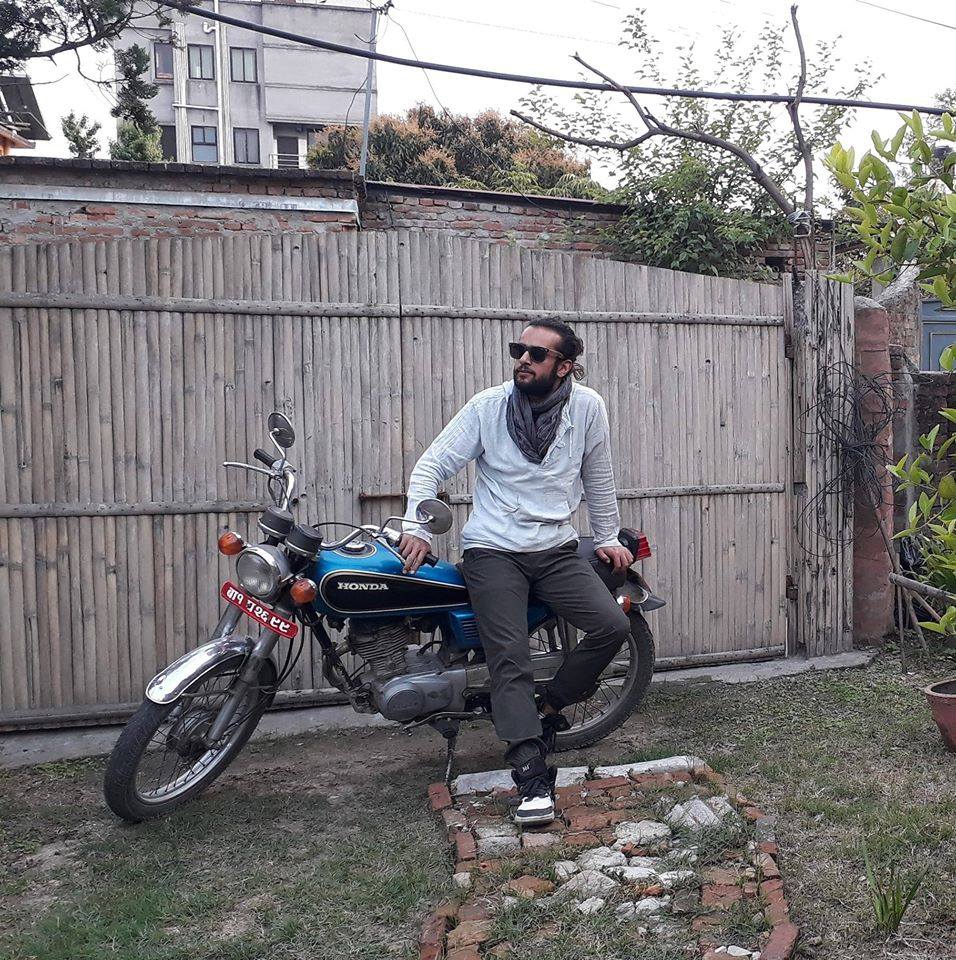
Sustainability Lab (SL), established in 2018 under The Industrial Enterprises Act 2049 (1992)as Cottage Industry, is located at Bansbari, Kathmandu. Sustainability Labis a collaborating and co working space where people from all age can work for advancing a dream, of working for an effort to live in a prosperous society enjoying better self. We collaborate with Government agencies, NGO’s, formal & informal groups and also with Individuals (students or entrepreneurs) to bring about a change which promotes sustainable harmony. Our journey started in 2017. When we began, we were not sure about how to go about it. However, we knew we wanted to build a co-working space and develop a sustainable community. With this in mind, we came across bamboo, highly simple and sustainable product, and that is how we found the perfect material to build this space. Everything that you can see around is made up of either recycled materials or of Earth materials, from tables to chairs to bricks. The bricks are from the ruins of Rangashala. Sustainability Lab has in fact prolonged the lives of every material to build this co-working space. So, as the name suggests, our business is rooted in simplicity and sustainability. Founded by ShubhangaPyakurel and AshutoshGautam, Sustainability Labs is a co-working platform for amateur and professional individuals and groups. It is located in Bansbari, Kathmandu and works with the objective of fostering creativity, economic independence, environment preservation, and community development. The focus is on the sustainable way of living and we are trying to bring together community members for collective social actions to adapt in a sustainable environment. We have been organizing discussion programs, talk shows, cooking events, plantation and more. We also encourage community on making organic manure, we have had three successful trainings regarding domestic manure making. We look forward to engage women in the community into income generating activities using their cultural influences in cooking food, giving classes, making handicrafts etc.

Vision A society that is capacitated for needs fulfillment in a sustainable and efficient manner. Mission To aware, train and capacitate individuals, groups and communities to achieve self-reliable and sustainable way of life and well-being. Goals To link and create abstract and physical resources and needs as per the requirements of concurrent/ contemporary issues of sustainability. Objectives – To conduct capacity building trainings and activities in relation with sustainable living for elders, children and youth – To facilitate exposure to children and youth regarding sustainable living through various government and non-government based resources. – To link the senior generation to the younger generation in the creation and implementation of innovative ideas with acceptance. – To collaborate with like-minded individuals, groups, communities and organizations for fulfilling the vision, mission and goals. – To work for better psychosocial adjustment of every individual. – To work on reduce, reuse and recycle and also to upcycle things considered as waste. – Work on sustainable and green entrepreneurship based on ability, creativity and aspiration. Co-Working space Sustainability Lab as a Co-Working Space provides following services: – • Working Space for an individual, informal groups, youth clubs, INGOs, NGOs and government agencies. • Sustainable Café for tea, coffee and snacks. • Internet Service. • Sustainable Library for reading, burrowing and buying books. • Peaceful and Friendly environment. As per the conversation with the founder of the Sustainability Lab Mr. ShubhangaPyakurel cleared the queries among these topics: • What social problem are you trying to solve and what social changes do you see your service bring in society? Through our venture, we are trying to connect the community with each other, and with the environment. We believe that people today live in isolation, and we want to be a platform that supports connectivity between individuals and groups. So, the space of Sustainability Labs can be used as a co-working space, a place to hold community events, community meetings, host community recreation and so on. Connectivity plays an important role in developing communities, and communities are essential to solve various social problems. • Through Sustainability Labs’ community, we are currently addressing the problems of solid waste management in the Bansbari area. We also make up-cycled and recycled products to encourage sustainable consumption. We are also promoting environment preservation through plantation programs put forward by our venture, through our community. Hence, Sustainability Labs is promoting sustainable and holistic community for the people, by the people. • 3. What challenges did you face while starting this venture, and what are the challenges that you are facing right now? One of the challenges we faced was in terms of encouraging the community to participate. Because it is a private venture, people were reluctant to participate. So, we had to channelize our volunteers to encourage community participation. While operating, we found that if you want to work with the community for the community, it is very essential to find leaders within the community who are willing to stimulate participation. So, finding leaders, in a developed society like us, is another challenge for us, because, in a self-sustaining developed society, the sense of community is lost. Another challenge is in terms of capital. We have found that people are always willing to pay for products, but for something which is not tangible like services, people are a bit hesitant. We also face major challenges in terms of our products. People naturally are more willing to spend on new and expensive products than on sustainable products with ethical origins. However, we also lack proper finishing in our products, so finding skills and techniques to develop refined products is another challenge. • How are you overcoming your challenges? We are trying to overcome our challenges mainly through collaboration with different people, organizations, incubators, and entrepreneurs. • What stage is your company in? We are a start-up at its very initial phase. We are currently just looking at our business from different angles and figuring things out. • How many people are working with you right now and how many did you start with? Initially, we worked as self-engaged youths but now we have four staff including two single women who are helping us to gradually grow. We are also providing these women cooking skills so they can be self-dependent in the future. However, it is difficult to define who falls under the jurisdiction of our human resource, for instance in this community we have an individual who actively leads the community and help us do our work, so should we include him as our human resource capability, why not? The people in the community are after all the people we want to work with. We also have interns who contribute significantly to develop this venture. • What do you think is the marketability, potentiality, and scalability of this venture? We believe that people in Kathmandu are in dire need of space. We particularly have locational advantage and can offer a peaceful environment to work in. Our space can be used by students from Nepal Medical Council, Namuna Fashion College who have their institutions nearby. Our space can also be used by entrepreneurs and micro-businesses who cannot afford their own space. Similarly, our space can be used by the community to hold meetings, or for leisure. As there are not any such spaces nearby, we do have good potential. Similarly, our space can be used for different purposes so we are also scalable, thus allowing us to expand our services to a wide range of people. Similarly, if we can develop manufacturing capability, our products also have huge potential because solid waste management is a huge issue in Kathmandu, and there is the potential to go into different directions to resolve this problem. For example, we can make up-cycled products, or even micro waste banks, we can be sellers of treated waste to other recycling and upcycling enterprises. • Who are your target customers? Our target customers are creatively sound individuals and environmentally conscious people. However, we are not limited to one group of people. We also welcome musicians, poets, yoga enthusiasts, trainers, drama artists, spiritual leaders, who want a platform to utilize their skills. Similarly, we also have a platform for people in our community who want to sell products from their kitchen garden, so we also provide a flea market/ farmer’s market opportunities. • How much have you invested in this business? We have invested more than 30 lakhs. • How do you ensure self-sufficiency or profit-making model? It is not difficult to sustain a business by self once we start operating on a full scale. However, now our door is open to everyone, as we are analyzing the different aspects and figuring out to improve our services day by day. Currently, we are operating through close personal connectivity for self-sufficiency, because the idea is to promote sustainable solutions. So, we do not want to dive into the marketing of our business and diverge from the path of sustainability. We are primarily focusing on social impact, and as a matter of fact, we believe that once the time is right, we will have developed enough convincing power and trust of the community to attract profit. • Have you been measuring the impact of your business? We do not have initial data to compare and contrast the impact. However, we are doing our research and believe that we will have a quantitative impact measurement in the near future. However, the physical impact is visible, the number of community participation has definitely increased, the community has revitalized a sense of community citizenship, as you can see the clean and proper roads, use of dustbins in this community. In this way, the impact has been evident. • What are the key needs of your company? The key needs of our company are in terms of finding skilled human resource capability, and someone to guide us in the profit-making side of the business, like an incubation program. • Do you consider yourself as your social entrepreneur? We are in the phase of becoming social entrepreneurs. So, we are social entrepreneurs in making, we are trying to build ourselves by understanding our community through research. To succeed in becoming a social entrepreneur, we want to recognize our business potential and the most potential business opportunity and then impact lives.